.png)


.png)


.png)


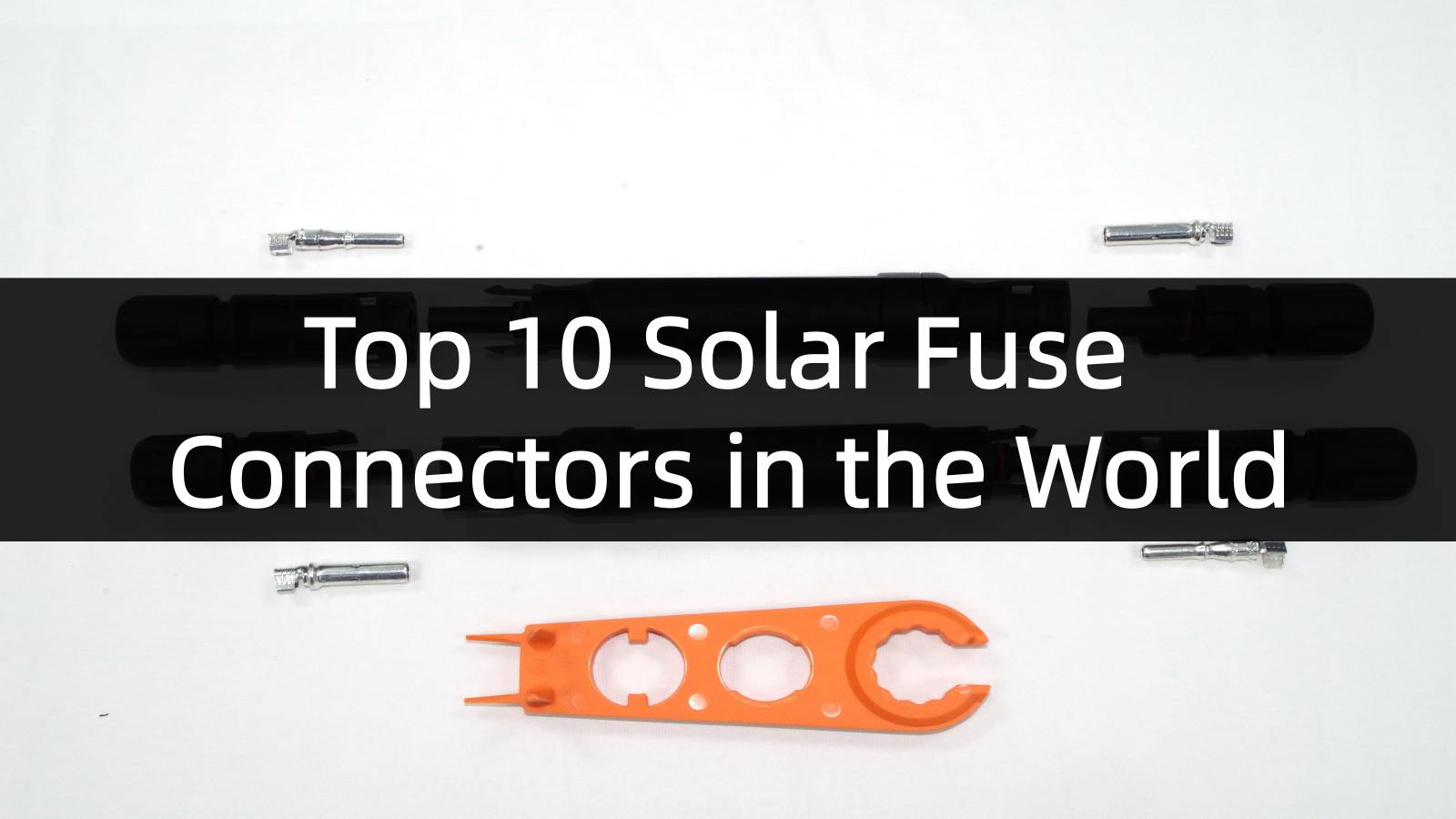
Are you looking for a solar fuse connector that still holds its contact resistance after a decade on a rooftop? Do you need a supplier who will match gPV fuse ratings to your actual string current instead of quoting a fixed catalogue? Or are you trying to establish whether a candidate factory moulds its own housings and crimps its own harnesses, rather than relabelling someone else's product?
If the answer is yes, then the global solar fuse connector supply chain offers genuine depth, but it is unevenly documented. Inline fuse holders sit at the intersection of two disciplines — overcurrent protection and connector engineering — and many suppliers are strong in one and weak in the other. The shortlist below covers manufacturers with verifiable product pages for solar fuse connectors, PV fuse holders and gPV fuse links, spanning Chinese connector specialists, harness builders and international circuit-protection brands. Each entry states what the company actually makes, so you can judge fit before you request samples.
Quick Navigation
- HANDA
- LEADER
- NSPV
- Loong Seal
- FR-CABLE
- Risin Energy
- IPKIS
- Zhejiang Xinli Fuse
- Zhejiang Westking New Energy
- Littelfuse
1. HANDA

https://www.handaconnector.com/
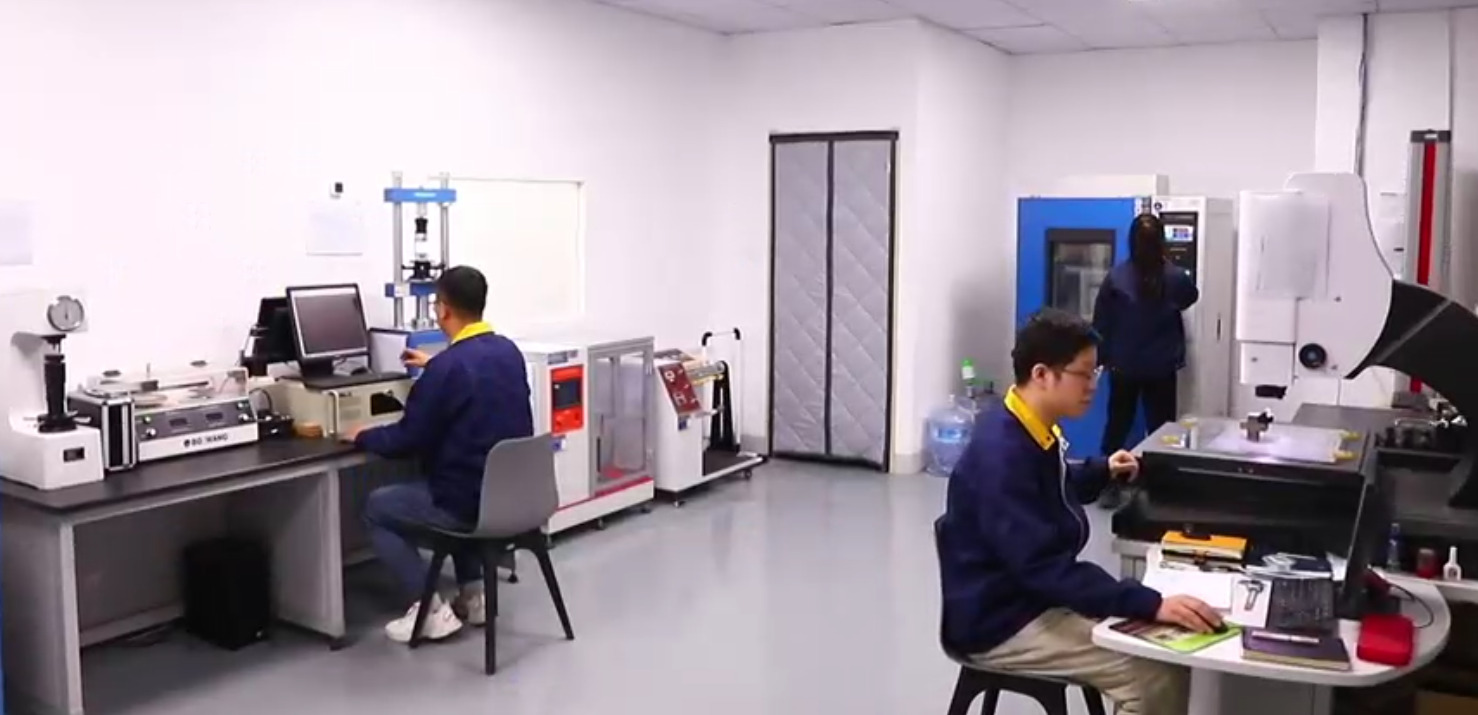
Headquarters / Supply Model: Jiangsu Handa Power Technology Co., Ltd., based in Jiangsu, China. Manufacturer of PV connectors with its own tooling and a documented customisation service, supplying inverter manufacturers, wholesalers and project contractors directly.
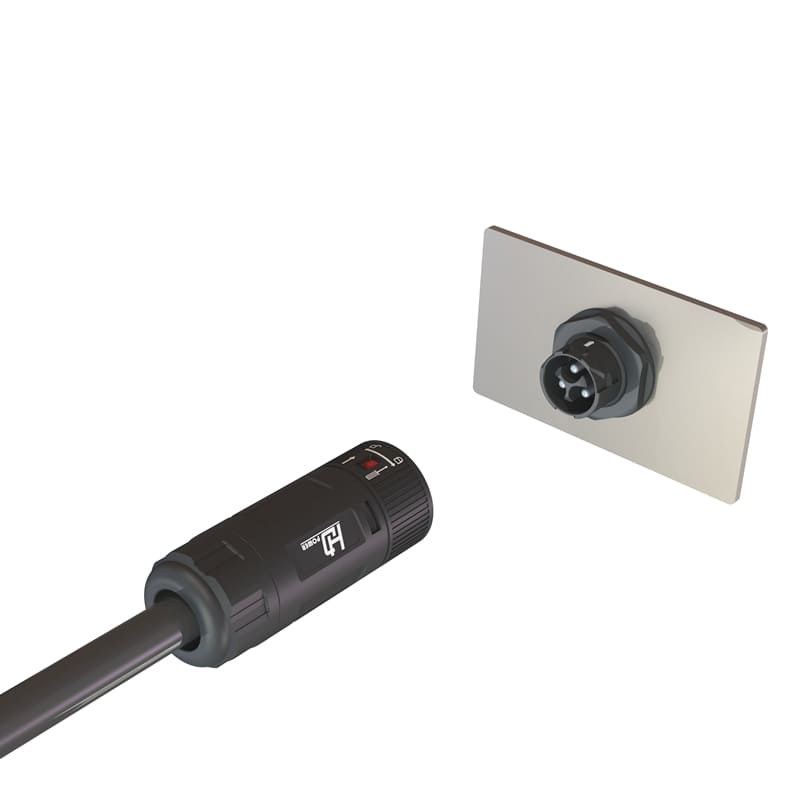
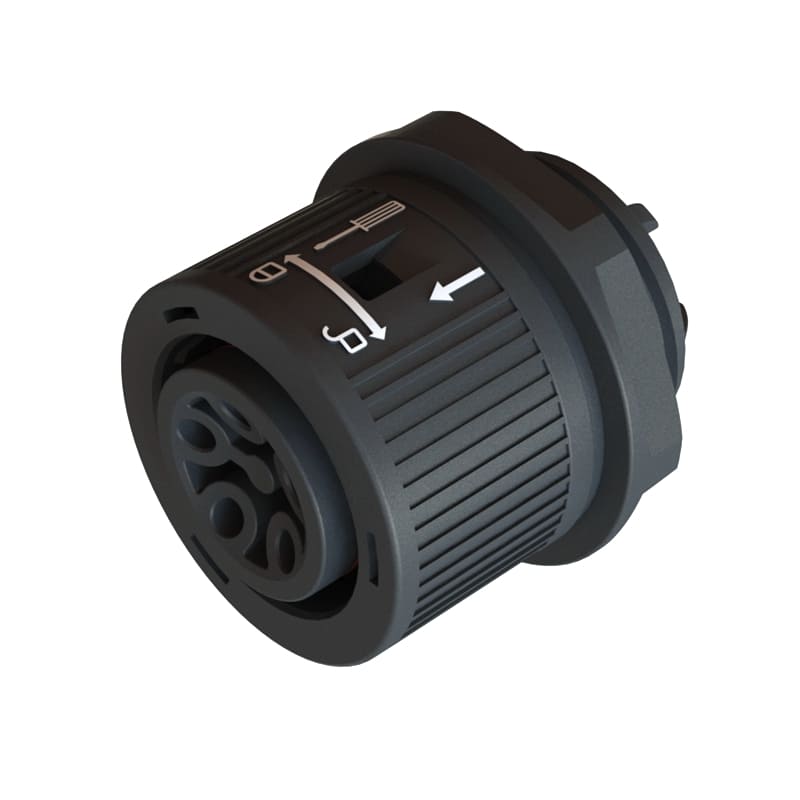
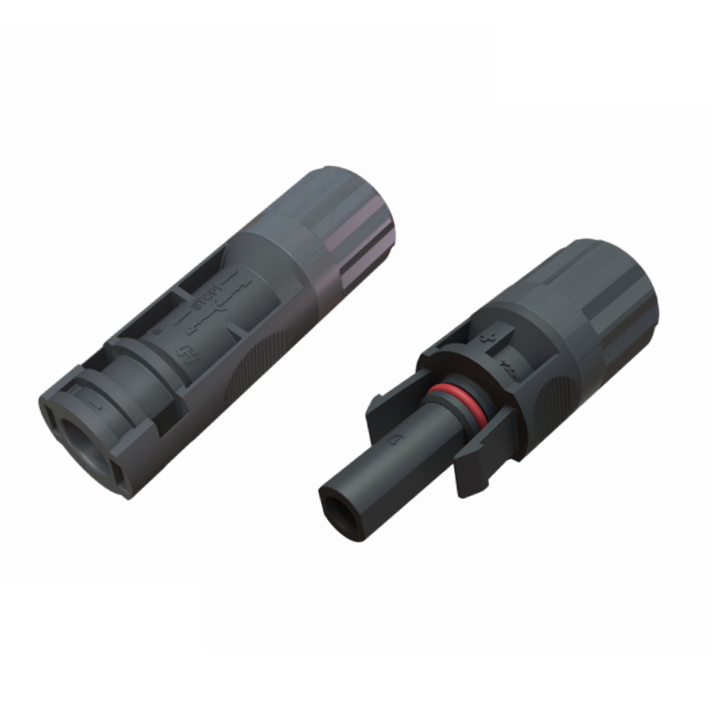
Core Products / Technologies: A dedicated solar fuse connector line in 1000 V DC and 1500 V DC versions, both rated to 32 A maximum with a replaceable fuse link covering 2 A to 32 A. Published figures include contact resistance of 0.25 mΩ or less, wet insulation resistance of 500 MΩ or more, rated impulse voltage of 12 kV (1000 V model) and 16 kV (1500 V model), overvoltage category CAT III / pollution degree 2, and safety class II. The fuse is changed with a tool rather than by hand. The wider range covers PV DC and AC connectors, branch connectors, energy storage connectors, communication connectors and AC terminal blocks, so a string can be built from one brand end to end.
Why Consider HANDA: The solar fuse connector is a named product category here rather than an accessory buried in a catalogue, and the published electrical data is specific enough to check against a string design. Because the same factory also makes the mating PV connectors and branch connectors, contact geometry stays consistent across the loop — which matters when a mixed-brand joint is the usual source of thermal failure.
Best Suited For: Inverter manufacturers and EPCs who need string-level protection matched to a defined connector family, and buyers who want fuse connectors and harness assemblies specified together rather than sourced separately.
Before Purchasing: Ask for the cold-weather open-circuit voltage rating confirmation for your string, the fuse standard and body size accepted by the holder, and whether the housing ingress rating is stated per model. For harness work, confirm crimp tooling, pull-test criteria and the drawing revision you are quoting against.
2. LEADER

https://www.leadergroup-cn.com/
Headquarters / Supply Model: Dongguan Leader Technology Co., Ltd. (LEADER CABLE), Dongguan, China. Manufacturer operating an automated connector and cable assembly factory, selling direct and through export channels.
Core Products / Technologies: Solar inline fuse holders in 1500 V TUV and UL ratings, with current coverage from 1 A to 50 A and cable acceptance from 2.5 mm² to 16 mm². Published specifications for the SY-CF0-15C holder include PPO/PC insulation, tin-plated copper contacts, contact resistance below 0.35 mΩ, IP68 protection, an operating range of −40 °C to +90 °C, and a 6 kV test voltage. Certifications cited include IEC 62852 and UL 6703, alongside TUV Rheinland, UL, JET, DEKRA, CE and RoHS. The product family also covers MC4 inline fuse versions and PV inline fuse connectors with replaceable links.
Why Consider LEADER: The company publishes its production method rather than only its catalogue — automated assembly with stated positioning accuracy and 100% inspection with digital marking. For buyers who audit process capability rather than just sample performance, that level of disclosure is useful. The inline fuse holder is offered as a standard catalogue item with a downloadable datasheet, which shortens specification work.
Best Suited For: Distributors and installers who need a catalogue-standard inline fuse holder with broad certification coverage, and OEMs sourcing fuse connectors alongside solar cable and harness assemblies from one supplier.
Before Purchasing: Confirm which certificate applies to the exact model and voltage class you are ordering, since the range spans several standards. Verify the fuse body size the holder accepts and whether the link is field-replaceable with standard tooling, and request the packaging quantity and carton weight for freight planning.
3. NSPV

Headquarters / Supply Model: Dongguan NewSun PV Technology Co., Ltd., Dongguan, China. Manufacturer of PV connectors and solar fuse connectors, supplying OEM and distribution customers.
Core Products / Technologies: An unusually deep solar fuse connector range for one manufacturer: 1500 V DC inline fuse connectors, a 2-in-1 solar branch fuse connector, a 100 A fuse connector at 1500 V DC, 14 × 85 mm and 10 × 85 mm inline fuse versions rated 20 A to 50 A, a DC 1000 V universal MC-type fuse connector, and a solar diode connector series. Published characteristics include contact resistance of 0.25 mΩ or less, IP68 sealing, cable acceptance from 1.5 mm² to 10 mm² (16–8 AWG), UV-resistant PPE/PA insulation and an operating range of −40 °C to +85 °C.
Why Consider NSPV: Few suppliers document the branch fuse variant, where fusing and parallel branching happen in a single body. For arrays that combine parallel strings with string-level protection, that removes a joint and a potential water trap. The range also spans 1000 V and 1500 V classes and several fuse body sizes, so a project with mixed string designs can often be covered from one source.
Best Suited For: System integrators designing parallel-string arrays where a combined branch and fuse connector simplifies the harness, and buyers who need multiple fuse body sizes from a single supplier.
Before Purchasing: Clarify whether the branch fuse version protects each input independently or shares one link, and confirm the current rating per branch rather than per assembly. Ask for the mating connector series and check cross-mating guidance before combining with another brand.
4. Loong Seal

Headquarters / Supply Model: China Loong Seal Co., Ltd., China. Manufacturer and supplier offering OEM and ODM production, with a stated minimum order of 100 sets on its solar fuse connector model.
Core Products / Technologies: Solar PV inline fuse MC4 connectors, model LS-5222, offered in DC 1000 V and DC 1500 V versions with 30 A, 45 A, 50 A and 60 A ratings. Published data includes IP67 protection, tin-plated copper contacts, UL 94 V-0 flame-retardant housing, contact resistance below 0.5 mΩ, an operating range of −40 °C to +90 °C under IEC and −40 °C to +75 °C under UL, an upper limiting temperature of +105 °C, and a salt mist test to level 5 under IEC 60068-2-52.
Why Consider Loong Seal: The current ratings reach 60 A, above the 32 A ceiling common to many inline holders, which suits larger-format strings and some storage-side circuits. The salt mist result is stated explicitly, which is the specification that matters for coastal and floating installations and is frequently left out of inline fuse holder datasheets.
Best Suited For: Projects with higher string currents, coastal or high-humidity sites, and buyers who need modest volumes with customisation rather than full container loads.
Before Purchasing: Confirm which temperature range applies to your certification route, since the IEC and UL figures differ. Ask whether the 60 A rating holds at 1500 V DC or only at the lower voltage class, and request the salt mist report rather than relying on the catalogue line.
5. FR-CABLE

Headquarters / Supply Model: PV cable and harness manufacturer building in-line fuse connectors into custom harness assemblies rather than selling the connector as a standalone part.
Core Products / Technologies: In-line fuse connectors for 2 kV photovoltaic copper cable in 12, 10, 8 and 6 AWG, with fuse options from 1 A to 65 A. The assembly is stated to comply with UL 9703 for 1500 V DC systems and to suit single-string, 2-string and 3-string configurations. Construction uses a dual-layer injection moulding process for sealing, resistance welding for the conductor joint, and an IP68 rating. Connector interfaces are offered as brand options compatible with MC4, TS4, JM608, PV-ZH202B and S418, with fuse brands including Littelfuse and Adler.
Why Consider FR-CABLE: This is a harness-first supplier, which changes the commercial model. If your requirement is a pre-terminated string lead with the fuse already inline and tested, buying the assembly rather than the component removes a field crimp — and field crimps are where most inline fuse failures begin. The stated compatibility list across several connector families is also more specific than the usual "MC4 compatible" claim.
Best Suited For: EPCs and OEMs who want factory-terminated string harnesses with integrated fusing, and buyers running multi-string configurations where the harness topology is fixed at design stage.
Before Purchasing: Confirm the exact connector brand and model that will be fitted, since "compatible" covers a wide range of tolerances. Ask for the UL 9703 scope as it applies to your configuration, the fuse brand and standard supplied, and the test routine applied to each finished harness.
6. Risin Energy

Headquarters / Supply Model: Solar balance-of-system supplier covering cable, connectors, fuses and breakers, selling through export and distribution channels under the RISIN brand.
Core Products / Technologies: MC4 PV fuse holders using a 10 × 38 mm link at 1000 V DC, with a stated fuse range of 6 A to 30 A, IP67 protection, PPO insulation, tin-plated copper contacts and contact resistance below 1 mΩ, certified to TUV, CE and RoHS. The wider fuse range includes a PV array DC fuse holder base and link in 10 × 65 mm at 1500 V for 10 A to 32 A, and a 10 × 85 mm 1500 V DC gPV fuse with holder rated to 30 A.
Why Consider Risin Energy: The company sells the holder and the fuse link together across three body sizes, which simplifies procurement and removes the risk of a holder being paired with an unsuitable link. Buyers who also need solar cable, MC4 connectors, branch connectors and DC breakers can consolidate a balance-of-system order.
Best Suited For: Distributors and smaller installers building a mixed BOS order, and buyers who want a single source for holders, links and matching connectors.
Before Purchasing: Verify that the link supplied is gPV rated for DC service rather than a general-purpose fuse, and confirm the voltage class of the specific holder-and-link combination. Check the contact resistance figure against the model you are ordering, since it varies across the range.
7. IPKIS

https://www.pv-accessories.com/
Headquarters / Supply Model: IPKIS New Energy, a PV protection product manufacturer active in this category since 2003, producing enclosures, combiner boxes and photovoltaic accessories.
Core Products / Technologies: A photovoltaic fuse and fuse holder line rated up to 1500 V DC and up to 50 A, positioned for overcurrent protection of PV component strings. The portfolio also includes plastic enclosures, solar combiner boxes and PV accessories such as connectors, cable glands and cable switches, with customisation offered on enclosure sizes and materials.
Why Consider IPKIS: The fuse and holder range sits inside a broader enclosure and combiner box business, which is useful when the fuse connector is part of a packaged assembly rather than a standalone purchase. A supplier that already builds the enclosure around the protection device tends to have a practical view of clearance, heat and service access.
Best Suited For: Buyers procuring combiner boxes or enclosure-based assemblies who want the fusing specified by the same supplier, and projects needing custom enclosure dimensions alongside standard fuse holders.
Before Purchasing: Confirm whether the fuse holders are DIN-rail mounted inside an enclosure or available as inline units, since the catalogue description covers string protection generally. Ask for the derating information that applies when holders are mounted in a closed enclosure, where ambient temperature is higher than in free air.
8. Zhejiang Xinli Fuse

Headquarters / Supply Model: Zhejiang Xinli Fuse Co., Ltd., Zhejiang, China. A fuse specialist that develops, produces and trades fuse links and holders, holding IATF 16949, ISO 9001, CCC, CE and TUV Rheinland certification and stating more than 30 national utility model patents.
Core Products / Technologies: Solar PV fuse links in 1000 V and 1500 V DC classes, including a 10 × 85 mm 1500 V link rated to 32 A with a stated 50 kA breaking capacity, SLPV 10 × 85 links at 1500 V DC and 20 A, and 10 × 38 mm gPV links at 1000 V. Solar PV fuse holders are offered for 10 × 85 mm links at 1500 V DC and 32 A, and for 10 × 38 mm links at 500 V DC.
Why Consider Zhejiang Xinli Fuse: This is a fuse maker first, and the breaking capacity is published rather than implied. That 50 kA figure at 1500 V DC is what determines whether a link can actually clear a fault on a large parallel array. The company also states it has been invited to contribute to national fuse standards, which is a meaningful signal about its technical standing in its home market.
Best Suited For: Buyers who specify the fuse link separately from the connector, and projects where prospective fault current is high enough that breaking capacity must be verified rather than assumed.
Before Purchasing: Confirm that the holder you intend to use is rated for the same voltage class as the link, since a 1500 V link in a lower-rated holder negates the protection. Ask for the time-current curve and the breaking capacity at your system voltage, not just at nominal conditions.
9. Zhejiang Westking New Energy

https://www.westking-fuse.com/
Headquarters / Supply Model: Zhejiang Westking New Energy Technology Co., Ltd., Zhejiang, China. Manufacturer focused on direct current fuses for the new energy sector, with applications listed across electric vehicles, wind and storage, rail transportation and solar generation.
Core Products / Technologies: A 10 × 38 mm PV fuse holder rated 1000 V DC, gPV PV fuse links in 10 × 38 mm at 1000 V DC, NH0 and NH1 gPV PV fuse links at 1000 V DC, and 10 × 38 mm fuse clips for PCB mounting. The catalogue is organised around DC fusing for multiple new energy applications rather than solar alone.
Why Consider Westking: The NH0 and NH1 gPV links are the differentiator. Those are the larger-format links used where a string-level holder is not the right answer and protection moves into a combiner or distribution enclosure. A supplier that covers both the small cylindrical links and the NH formats can support a project that uses different protection architectures in different parts of the array.
Best Suited For: Buyers specifying fusing for combiner boxes and distribution enclosures, and manufacturers needing DC fuse links across several new energy product lines rather than solar only.
Before Purchasing: Confirm the voltage class of each NH link, since the catalogue lists 1000 V DC versions and higher-voltage designs are a separate specification. Ask whether the fuse holder is intended for DIN-rail mounting inside an enclosure and what its rated current is with the link fitted.
10. Littelfuse

Headquarters / Supply Model: Global circuit protection manufacturer with a dedicated solar segment, supplying fuses, fuse holders, relays, DC disconnect switches and surge protective devices to PV and energy storage customers worldwide.
Core Products / Technologies: UL-listed and IEC-compliant solar fuses rated to 1500 V DC with very high interrupting ratings, together with fuse holders and accessories for secure fuse installation. The solar range is aimed at rooftop combiner boxes, inverters, transformers and battery charger controllers, and the company publishes a photovoltaic fuse sizing application guide alongside its product data.
Why Consider Littelfuse: For buyers whose specification requires a recognised international fuse brand inside the assembly, Littelfuse is the reference point most often written into project documentation. The published sizing guide is also practically useful: it addresses the failure mode that causes most nuisance blowing, which is fitting a standard non-PV fuse to a PV circuit.
Best Suited For: Projects with brand-name specification requirements, utility-scale and commercial installations where documentation and traceability matter, and OEMs who need a globally recognised link inside their own holder.
Before Purchasing: Note that this is primarily a fuse and fuse holder supplier, not an inline connector manufacturer. If you need the sealed inline assembly, you will be specifying a Littelfuse link inside another supplier's holder. Confirm the link's voltage and breaking capacity against your string design, and verify holder compatibility rather than assuming a shared body size implies interchangeability.
Key Factors That Affect Solar Fuse Connector Prices
Quoted prices for solar fuse connectors vary by a factor of several between nominally similar parts, and the difference is rarely arbitrary. It usually sits in five places: the fuse link inside, the housing compound, the contact system, the certification scope and the volume committed. Understanding which of these you are actually paying for is the difference between a competitive quote and a cheap one that fails in year three.
- Fuse link standard and breaking capacity: A gPV link rated for full-voltage DC interruption costs more than a general-purpose fuse of the same current rating. On large parallel arrays the breaking capacity figure is the whole point of the device, so this is the last line item to cut.
- Voltage class: A 1500 V DC connector uses more insulation distance and a longer body than a 1000 V version. If your cold-weather string voltage stays under 1000 V, specifying 1500 V everywhere adds cost without adding protection.
- Housing compound and sealing: PPO and UV-stabilised PA66 cost more than commodity plastics, and a double O-ring arrangement with a sealed fuse cap costs more than a single gasket. This is where coastal and high-humidity projects should not economise.
- Contact material and plating: Tin-plated copper with a controlled crimp geometry is the baseline for a low contact resistance figure. Thin plating or undersized contact area shows up as heat at the joint rather than as a lower price on the quotation.
- Certification scope: A certificate covering the exact model and voltage class you are buying is worth more than a certificate covering a sibling product. Multi-standard approval across TUV, UL and IEC adds cost but reduces re-testing when a project changes market.
- Order volume and customisation: Standard catalogue parts at container volumes price very differently from custom harness assemblies with specified connector brands, fuse brands and per-unit testing. Custom crimping, labelling and packaging are labour, and labour is the variable that moves most.
- Testing and documentation: Pull tests, contact resistance checks, ingress testing and batch traceability all cost money per unit. For projects with a warranty obligation longer than the installation contract, that cost is usually cheaper than the failure it prevents.
FAQs – Solar Fuse Connectors
1. What is the difference between a solar fuse connector and a PV fuse holder?
A solar fuse connector is a fuse holder built into a connector body, so the fuse sits inline on the string cable and terminates through push-fit interfaces at both ends. A PV fuse holder is usually a DIN-rail or panel-mount base designed to sit inside an enclosure. Both hold the same type of gPV link, but only the inline version is sealed for direct outdoor use on a cable run.
2. How do I choose the right fuse rating for a string?
Start from the module short-circuit current at STC and apply the 1.56 multiplier used in NEC 690.8 and 690.9, then select the next standard rating above the result. Confirm that rating does not exceed the module's maximum series fuse rating, and that the string cable ampacity after derating is at least as high. The lowest of those three values governs the selection.
3. Can I use a standard gG fuse in a solar fuse connector?
No. A gG fuse is not tested to interrupt DC fault current at the string's full voltage and its characteristic is not intended for continuous loading near its rating in a sealed outdoor housing. Use a gPV link to IEC 60269-6 with a DC voltage rating at or above the string's cold-weather open-circuit voltage.
4. Do I need a fuse connector on every string?
Not necessarily. A single string, or two strings in parallel, generally does not need string fusing because the available reverse current stays within the module's maximum series fuse rating. From three parallel strings upward, reverse current reaches twice Isc or more, and string-level fusing becomes necessary in most configurations.
5. What IP rating should an outdoor solar fuse connector have?
IP67 is the practical minimum for a rooftop installation, and IP68 is preferable where the connector sits at a low point, in a cable tray that collects water, or on a floating or coastal array. The rating is only valid if the fuse access cap is fully seated, so the cap sealing method matters as much as the headline number.
6. Why does my inline fuse keep blowing in summer?
Usually a combination of undersizing and missing temperature derating. Fuse ratings are established at a reference ambient in free air, while a holder on a sun-exposed rail or inside a closed enclosure runs considerably hotter. Recalculate with the manufacturer's derating curve, or relocate the connector to a shaded position with better airflow.
7. Can I mix connector brands within one string?
It is strongly discouraged. Two connectors that both claim MC4 compatibility can differ in contact geometry, plating thickness and locking spring force by enough to reduce the effective contact area while still passing a pull test. Use one brand across the whole loop, or insist on a documented cross-mating test if brands must be combined.
8. Is the fuse replaceable in the field?
On most serviceable designs, yes — the fuse link can be changed with a purpose-made extraction tool without replacing the connector. Replace the whole connector instead if there is any discolouration, deformation or corrosion at the end caps, because those signs mean the seals have already failed and a new link will not restore them.
9. What information should I send for an accurate quotation?
System voltage and the cold-weather open-circuit voltage of the string, module Isc and maximum series fuse rating, the fuse body size and current rating you need, cable size and insulation type, the mating connector brand and model, required certifications for your market, annual or per-order volume, and the delivery destination.
Who Is the Best Solar Fuse Connector Supplier?
There is no single best supplier for every project. The right choice depends on four things. Are you buying a sealed inline assembly, or a fuse link for an enclosure? Which voltage class does your string design require? How much certification documentation does your market demand, and do you want components or finished harnesses?
HANDA is worth considering where the requirement is a dedicated solar fuse connector rather than a general-purpose holder. Its range covers both 1000 V and 1500 V DC classes with a 2 A to 32 A replaceable link. Published contact resistance is 0.25 mΩ or less, and the housing is designed to mate with the same manufacturer's PV and branch connectors — which keeps the whole string loop within one contact geometry. Buyers who need fuse connectors, mating connectors and harness assemblies specified together will find that consistency more useful than a marginally lower unit price.
To discuss a project with HANDA, provide the system voltage and cold-weather string Voc, module Isc and maximum series fuse rating, the fuse body size you intend to use, cable size, required certifications, expected order quantity and delivery location.
Documented installations across residential, commercial and utility-scale projects are collected in the HANDA case studies, and full drawings, datasheets and certification documents are available on the PDF download page.
.png)


.png)
.png)


.png)


.png)
.png)
.png)