.png)


.png)


.png)

3333_1793341033_WNo_1600d900.webp)
PV solar connectors are essential electrical components in photovoltaic (PV) systems, providing secure connections between solar panels, DC cables, inverters, and other electrical equipment. Their electrical performance, mechanical design, and environmental protection directly influence the reliability and safety of solar installations. As photovoltaic systems continue to expand across residential, commercial, and utility-scale applications, selecting suitable connectors has become an important part of system design and procurement.
This guide explores the fundamentals of PV solar connectors, including their working principles, common types, key technical specifications, compatibility requirements, and safety considerations. It also examines important factors to consider when selecting and purchasing solar connectors, along with an overview of HANDA's PV connector solutions for solar equipment manufacturers, distributors, and project buyers.
Table of Contents ▼
- What Are PV Solar Connectors?
- How PV Solar Connectors Work in Solar Systems
- Common Types of PV Solar Connectors
- Key Specifications of PV Solar Connectors
- Compatibility and Safety Considerations
- How to Choose the Right PV Solar Connector
- HANDA PV Solar Connector Products
- Installation and Maintenance Considerations
- PV Solar Connector Price Factors
- Frequently Asked Questions
- Conclusion
1. What Are PV Solar Connectors?
PV solar connectors are electrical components designed to connect photovoltaic modules, DC cables, combiner boxes, inverters, and other parts of a solar power system. They provide a detachable connection between compatible cables and equipment while helping maintain electrical continuity and environmental protection.
In a typical photovoltaic installation, multiple solar panels are connected in series or parallel to achieve the required voltage and current. PV connectors make these connections easier to assemble, inspect, and maintain. They are commonly designed with insulated housings, conductive metal contacts, locking structures, and sealing components.
A reliable PV connector must do more than simply fit two cable ends together. Its rated voltage, current capacity, conductor size, contact resistance, temperature range, ingress protection, and material properties must all suit the intended installation.
1.1 Main Components of a PV Solar Connector
Although designs vary by product type, a typical cable connector contains several important components:
- Insulating housing: Provides electrical insulation and mechanical protection for the internal contacts.
- Metal contact: Conducts electrical current between the connected cables or equipment terminals.
- Locking structure: Helps prevent accidental separation after correct mating.
- Sealing components: Help limit moisture and dust ingress when the connector is correctly assembled and used within its rated conditions.
- Cable gland and compression parts: Secure the cable and help maintain the required sealing performance.
1.2 Why Connector Quality Matters
PV connectors operate in electrical systems that may experience sunlight, rain, temperature changes, vibration, and long periods of outdoor exposure. Poorly matched, incorrectly installed, or low-quality connectors can develop high contact resistance, overheating, insulation problems, or connection failures.
Sandia National Laboratories has investigated photovoltaic connector reliability and identified mismatched products, poor installation practices, and manufacturing or material issues as important risk factors. For buyers, this means connector selection and installation quality should be treated as part of the overall solar system safety strategy.
2. How PV Solar Connectors Work in Solar Systems
PV solar connectors create electrical connections between photovoltaic modules and the rest of the DC circuit. Their exact position depends on the system design, but they are commonly used in module leads, extension cables, branch connections, panel-mounted interfaces, and equipment connections.
2.1 Connecting Solar Modules in Series
In a series connection, the positive terminal of one solar module is connected to the negative terminal of the next module. This arrangement increases the total string voltage while the current remains determined by the series string's operating conditions.
Compatible male and female cable connectors are commonly used to connect module leads. The connector ratings must be suitable for the maximum system voltage, expected current, cable size, and environmental conditions.
2.2 Connecting Solar Modules in Parallel
Parallel connections combine the outputs of multiple strings or modules while maintaining a common voltage level and increasing the available current. Solar branch connectors can be used in certain system configurations to combine compatible positive or negative conductors.
The design must account for current levels, overcurrent protection, cable sizing, and applicable electrical requirements. Branch connectors should be selected according to the specific system wiring plan rather than simply choosing a connector because its shape appears suitable.
2.3 Connecting Cables to Solar Equipment
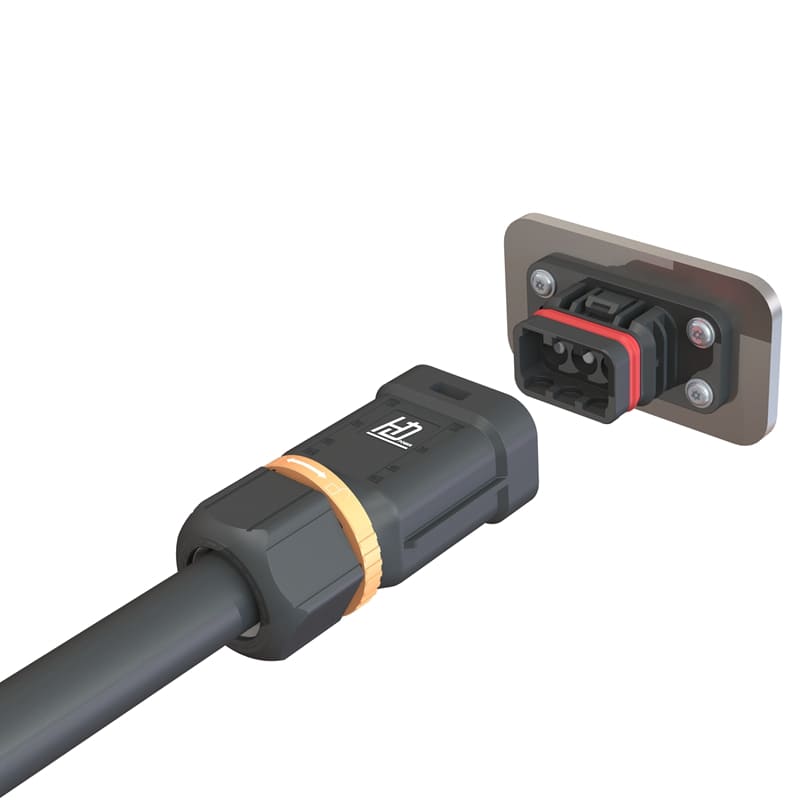
Panel-mount and on-board connectors provide connection interfaces for equipment enclosures, junction boxes, and circuit boards. These products can help equipment manufacturers integrate photovoltaic electrical connections into their product designs.
3535_1793341610_WNo_1600d900.webp)
3. Common Types of PV Solar Connectors
PV solar connectors are available in different structures to meet the connection requirements of photovoltaic modules, cables, enclosures, and electrical equipment. Understanding the main types helps buyers identify the right product for each application.
3.1 PV Solar Male and Female Cable Connectors
Cable connectors are widely used in photovoltaic module leads and solar extension cables. A male and female connector pair forms a detachable interface between compatible cable ends. The connector is typically assembled onto a specified cable using the appropriate contact and assembly method.
- Used for connecting compatible PV cables and module leads.
- Available for different conductor cross-sections and current requirements.
- Designed with locking and sealing structures for suitable outdoor applications.
- Useful for solar panel wiring, extension cables, and photovoltaic system connections.
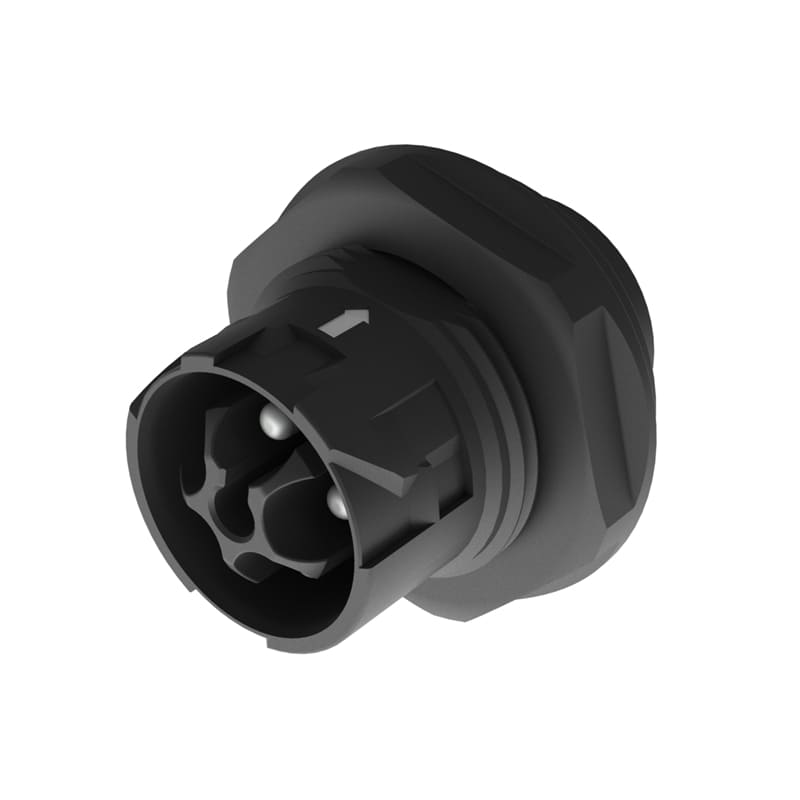
3.2 PV Solar Panel-Mount Connectors
Panel-mount connectors are designed to be installed through an equipment panel or enclosure. They provide an external connection interface while allowing the internal wiring to remain within the equipment housing. Mounting dimensions, thread type, sealing design, and terminal configuration should be checked before ordering.
3.3 PV Solar Branch Connectors
Branch connectors provide a way to combine or distribute connections in photovoltaic wiring configurations. Depending on the design, they may be used to connect multiple compatible solar cables in parallel. Buyers should verify the connector's pole configuration, rated current, conductor compatibility, and suitability for the intended circuit.
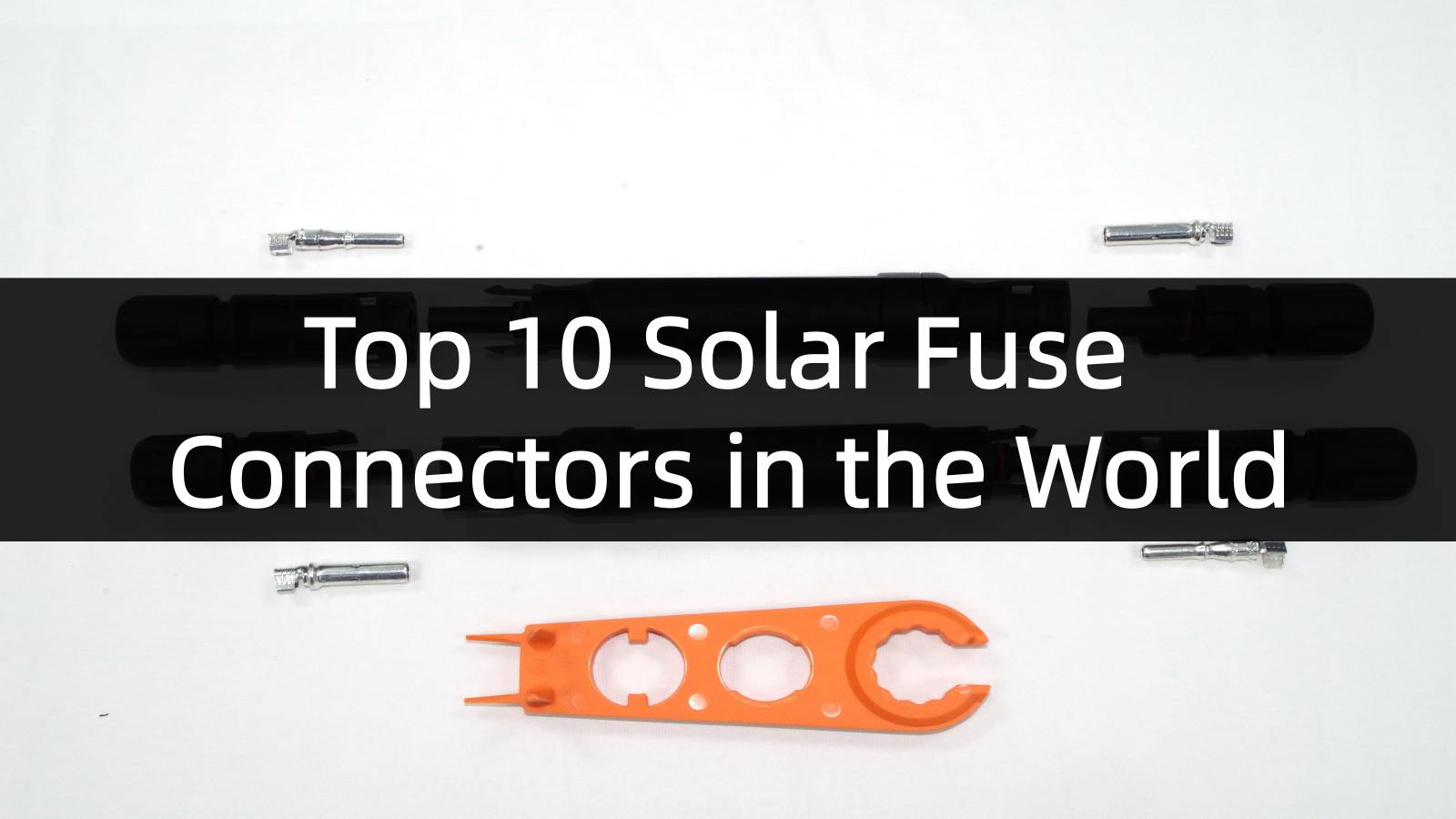
3.4 PV Solar Fuse Connectors
Fuse connectors integrate a fuse into a photovoltaic connection assembly. They can support overcurrent protection in applications where the system design and applicable electrical requirements call for this arrangement. The fuse rating, voltage rating, replacement method, and compatibility with the rest of the circuit must be confirmed before use.
3.5 PV On-Board Connectors
On-board connectors are designed for integration with electronic boards or equipment assemblies. Their terminal structures and mounting methods differ from ordinary cable connectors. They are suitable for equipment manufacturers that need a defined interface between external photovoltaic wiring and internal electrical circuits.
| Connector Type | Main Function | Typical Application | Key Selection Point |
|---|---|---|---|
| Male/Female Cable Connector | Connects compatible cable ends | Solar module leads and extension cables | Cable size, current, voltage, and mating compatibility |
| Panel-Mount Connector | Provides an enclosure connection interface | Solar equipment and junction boxes | Mounting dimensions and sealing design |
| Branch Connector | Combines or distributes circuit connections | PV string wiring | Pole configuration and current rating |
| Fuse Connector | Integrates a fuse into a connection assembly | PV circuits requiring specified overcurrent protection | Fuse rating and system design |
| On-Board Connector | Connects external wiring to equipment boards | Photovoltaic electrical equipment | Terminal structure and installation method |
4. Key Specifications of PV Solar Connectors
Technical specifications determine whether a PV connector can operate safely and reliably in a particular solar installation. Buyers should compare the complete product datasheet rather than relying on appearance or a single rating.
4.1 Rated Voltage
Rated voltage indicates the maximum operating voltage specified for a connector under its defined conditions. Some modern PV connectors are designed for systems up to 1500V DC, while other products have different voltage ratings. The connector's rating must be equal to or higher than the maximum voltage expected in the application, taking system design and applicable standards into account.
4.2 Rated Current
Rated current describes the current a connector is designed to carry under specified conditions. Current capacity may vary according to conductor size, contact design, ambient temperature, and installation conditions. A connector's maximum current should not be assumed to apply to every cable size.
4.3 Contact Resistance
Contact resistance describes the electrical resistance at the mating contact interface. Lower contact resistance can help reduce resistive heating, but the result also depends on correct mating, contact condition, conductor preparation, and installation quality. Buyers should check the test conditions and acceptance limits in the manufacturer's datasheet.
4.4 Ingress Protection Rating
IP ratings describe protection against the ingress of solid objects and water under defined test conditions. Some HANDA PV connector models specify IP65 or IP68 protection. These ratings are product-specific and depend on correct assembly and the conditions stated in the relevant datasheet. An unmated connector may have a different protection level from a correctly mated connector.
4.5 Temperature Range and Insulation Materials
PV connectors may be exposed to outdoor temperature changes and direct sunlight. The operating temperature range, insulation material, flame-retardant properties, and UV-related performance should be reviewed for the intended environment. Product materials and ratings should be verified against the actual model documentation.
4.6 Cable Size and Contact Material
The connector must be designed for the cable conductor cross-section and outside diameter used in the project. Contact materials and surface plating also influence electrical performance and corrosion resistance. Confirm the approved cable range and assembly requirements before placing an order.
4.7 Example: HANDA PV Solar Connector Specifications
The following table summarizes selected specifications published for HANDA's PV solar male and female cable connector product family. Values may vary by model and conductor size. Always request the latest datasheet for the exact part number before finalizing a design.
| Specification | Published Product Information |
|---|---|
| Product Series | HDC-41f1 / HDC-41m1 |
| Rated Voltage | 1500V DC |
| Impulse Voltage | 16kV |
| Rated Current | 30A for 2.5mm²; 41A for 4mm²; 55A for 6mm² (confirm the exact model datasheet) |
| Wet Insulation Resistance | ≥500MΩ |
| Contact Resistance | ≤0.25mΩ on the referenced product page |
| Mating Cycles | ≥500 |
| Pin Retention | ≥80N |
| Cable Retention | ≥180N |
| Wire Size | 2.5–6mm², depending on model |
Important: These are product-specific published values, not universal PV connector standards. Confirm the latest technical documentation, certification scope, and test conditions with HANDA before using the figures in a project specification.
5. PV Solar Connector Compatibility and Safety
Compatibility is one of the most important considerations when selecting PV solar connectors. Two connectors that appear similar or can physically be pushed together are not necessarily electrically or mechanically compatible.
5.1 Avoid Unverified Cross-Mating
Different manufacturers may use different contact geometries, dimensions, materials, locking structures, and sealing designs. Even when two connector halves appear to fit, their electrical contact and environmental performance may not have been validated as a matched pair.
Sandia National Laboratories has highlighted the risks associated with mismatched photovoltaic connectors. Buyers and installers should use connector pairs that are explicitly approved by the relevant manufacturers for mating together. Do not assume that connectors described as a common type or similar format are automatically interchangeable.
5.2 Check the Complete Electrical Rating
Voltage and current ratings should be considered together with cable size, ambient temperature, and system configuration. A connector that meets the voltage requirement may still be unsuitable if its current rating or conductor range does not match the application.
5.3 Confirm Correct Cable Assembly
Incorrect crimping, incomplete insertion, damaged seals, or improperly tightened cable glands can compromise connector performance. Use the specified contact, cable, tooling, and assembly procedure. Where required, have trained personnel inspect the finished connection.
5.4 Consider Moisture, Dust, and Temperature
Outdoor PV installations expose connectors to weather and environmental changes. Select products with protection ratings suitable for the installation location, and ensure that unused connector ends are protected with appropriate components. Do not leave open connectors exposed to moisture or dirt.
3434_1793341475_WNo_1600d900.webp)
6. How to Choose the Right PV Solar Connector
Choosing a PV connector should start with the electrical and mechanical requirements of the system. The following checklist can help project engineers, procurement teams, and solar equipment manufacturers compare products more systematically.
6.1 Define the Application
Determine whether the connector will be used for a solar module lead, extension cable, branch connection, equipment panel, or circuit board. The application determines the connector structure and installation method.
6.2 Confirm Voltage and Current Requirements
Check the maximum system voltage and expected operating current. Include the relevant design margins and environmental derating requirements specified by the system designer and applicable standards.
6.3 Match the Cable Specifications
Confirm the conductor material, cross-sectional area, cable outside diameter, insulation type, and cable construction. The connector must be approved for the actual cable being used.
6.4 Review Protection and Environmental Ratings
Consider the installation location, exposure to water and dust, temperature range, UV exposure, and mechanical conditions. Check whether the stated IP rating applies to the connector when mated, unmated, or installed in a specific configuration.
6.5 Check Certifications and Documentation
Request the applicable product datasheet, certificates, test reports, and installation instructions. Verify that the certification applies to the exact model and configuration being purchased, rather than assuming that every product in a manufacturer's range has identical approvals.
6.6 Evaluate Supply and Customization Requirements
For OEM and large-volume projects, discuss connector structures, cable assemblies, packaging, labeling, sample evaluation, production lead time, and quality documentation with the supplier. Technical suitability should remain the first priority.
7. HANDA PV Solar Connector Products
HANDA offers a range of photovoltaic and electrical connection products, including solar DC connectors, solar fuse connectors, solar branch connectors, solar AC connectors, and energy storage connectors. Its PV connector portfolio includes cable, panel-mount, and on-board connection designs for different equipment and wiring requirements.
The following products illustrate several connection options available from HANDA. Buyers should refer to the individual product pages and current datasheets for complete model-specific information.
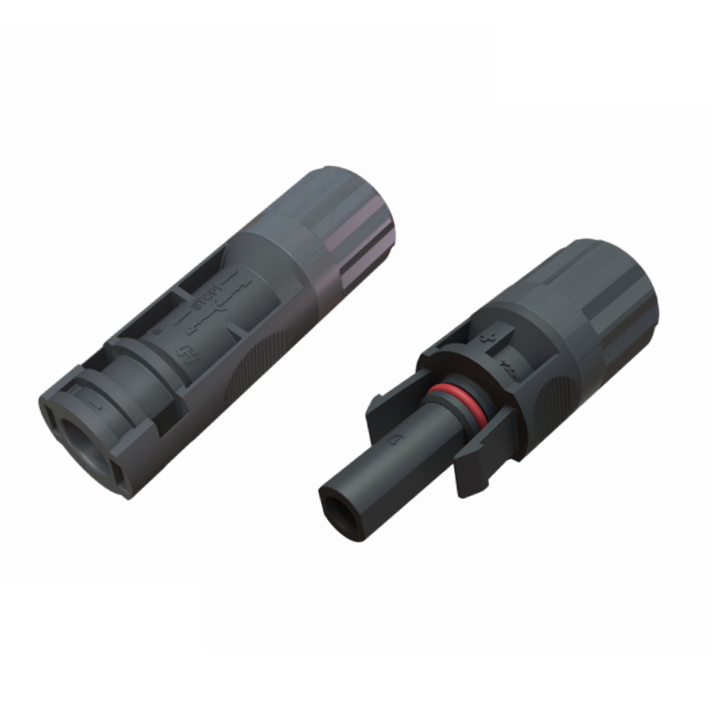
7.1 PV Solar Male Female Cable Connector
PV Solar Male Female Cable Connector
This connector series is designed for connecting compatible photovoltaic cables. The HDC-41f1 and HDC-41m1 models provide a male and female cable connection solution for suitable PV wiring applications.
- Published rated voltage: 1500V DC
- Published impulse voltage: 16kV
- Current ratings vary with conductor size
- Designed for compatible cable connection applications
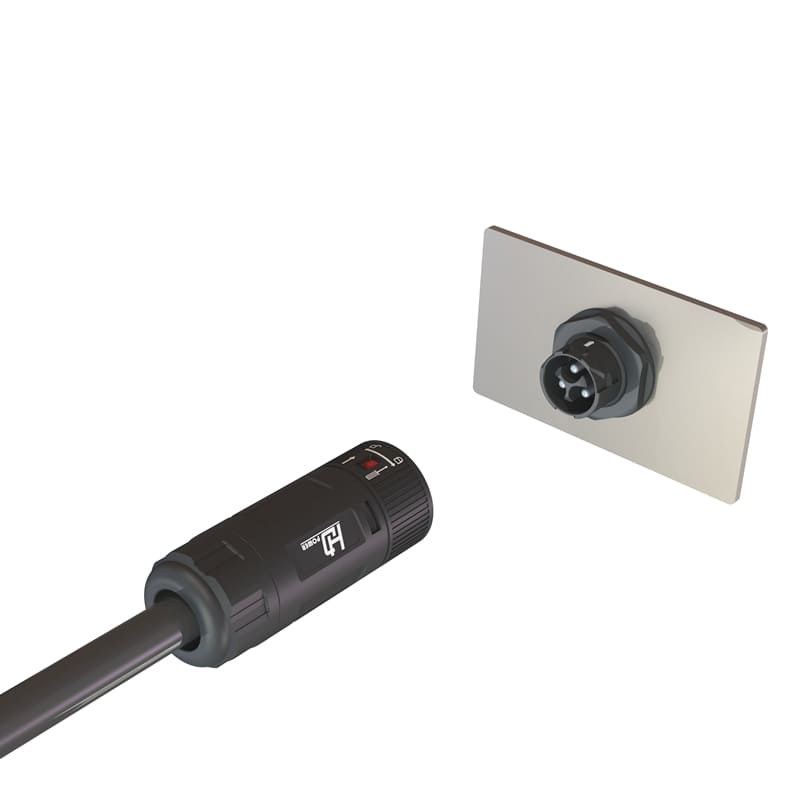
7.2 PV Solar Male Female Panel-Mount Connector
PV Solar Male Female Panel-Mount Connector
The panel-mount connector is designed to provide an external photovoltaic connection interface through an equipment panel or enclosure. It can be considered for solar equipment and assemblies that require a fixed mounting connection.
- HDC-41f3 / HDC-41m3 series
- Published rated voltage: 1500V DC
- Published impulse voltage: 16kV
- Mounting and wiring details should be checked against the product drawing
7.3 PV Panel-Mount Positive Negative Connector
PV Panel-Mount Positive Negative Connector
This product family provides positive and negative panel-mount connection options for photovoltaic equipment. Its mounting structure is intended for applications where the equipment design requires defined polarity interfaces.
- Positive and negative connector configurations
- Panel-mounted connection design
- Product-specific mounting and electrical specifications
- Suitable for evaluation in compatible PV equipment designs
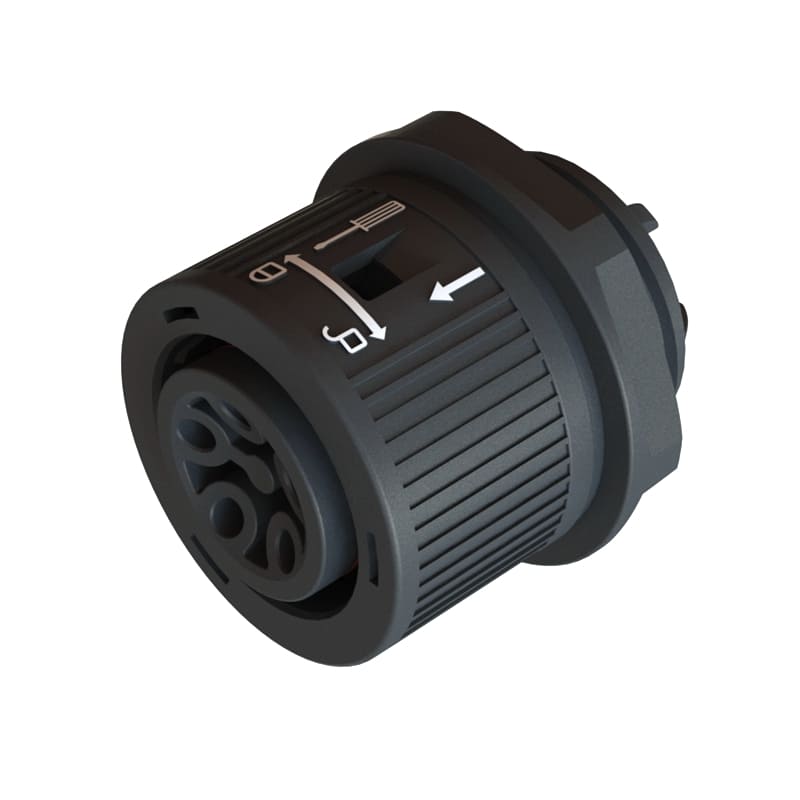
7.4 PV Panel-Mount On-Board Connector
PV Panel-Mount On-Board Connector
The on-board connector is designed for integration into photovoltaic electrical equipment. Its terminal and mounting structure can support equipment designs that require a connection between external wiring and internal circuit assemblies.
- HDC-41f2L / HDC-41m2L series
- Published rated voltage: 1500V DC
- Published current rating: up to 55A for the referenced model
- Published protection information includes IP65/IP68 under specified test conditions
7.5 Why Consider HANDA?
HANDA's product portfolio covers several connection categories used in photovoltaic and electrical equipment, allowing buyers to review different connector structures within one supplier's range. Its published product information includes PV cable connectors, panel-mount connectors, on-board connectors, fuse connectors, and branch connector solutions.
The company also provides product customization and technical support information on its website. For projects with specific cable dimensions, mounting requirements, or equipment interfaces, buyers can contact HANDA to discuss the required configuration and request the corresponding technical documentation.
Potentially suitable for:
- Solar connector distributors and wholesalers.
- Photovoltaic module and cable assembly manufacturers.
- Solar equipment and junction box manufacturers.
- OEM buyers requiring defined connector configurations.
- Procurement teams comparing PV connector product families.
8. Installation and Maintenance Considerations
Correct installation is essential to the performance of PV solar connectors. Even a connector with suitable ratings can become unreliable if it is assembled incorrectly, damaged during installation, or used outside its specified conditions.
8.1 Follow the Manufacturer's Assembly Instructions
Use the specified cable, contact, crimping tool, and assembly procedure. Do not substitute terminals or use improvised tools. Confirm that the conductor is correctly prepared and that the contact is fully assembled according to the product instructions.
8.2 Inspect the Connection Before Commissioning
Qualified personnel should check that connector halves are correctly mated and locked, cable glands are properly assembled, and seals are not damaged. The installation should also be inspected for visible cracks, deformation, contamination, or exposed conductive parts.
8.3 Avoid Mixing Unapproved Connector Brands
Keep connector pairs from approved compatible product systems together. Do not mix male and female connector halves from different manufacturers unless compatibility has been explicitly validated and documented by the relevant manufacturers and accepted under applicable requirements.
8.4 Carry Out Appropriate Maintenance Checks
Inspection frequency should follow the project maintenance plan, equipment instructions, and local requirements. Where appropriate, qualified maintenance personnel may use visual inspection and thermal imaging to identify abnormal heating or signs of deterioration. Damaged or overheated connectors should be assessed and replaced using an approved procedure.
9. PV Solar Connector Price Factors
The price of a PV solar connector depends on its electrical ratings, materials, construction, certification requirements, and order conditions. Comparing unit prices alone may overlook differences in technical performance and documentation.
9.1 Connector Type and Design Complexity
Basic cable connectors, panel-mount connectors, branch connectors, fuse connectors, and on-board connectors have different structures and manufacturing requirements. More specialized designs may involve additional components, mounting features, or assembly steps.
9.2 Rated Voltage and Current
Higher voltage or current requirements may influence the contact structure, insulation design, and material selection. Buyers should compare products with equivalent ratings and test conditions.
9.3 Contact and Housing Materials
Conductive contact materials, surface plating, insulation materials, and sealing components all contribute to product cost. Material specifications should be checked against the application rather than choosing a product solely because it has a lower quoted price.
9.4 Certifications and Testing
Required certifications, verification testing, and quality documentation may affect the total purchase cost. Confirm which certificates apply to the exact model and whether additional project-specific testing is required.
9.5 Order Quantity and Customization
Production quantity, packaging, labeling, cable assembly, customized structures, and delivery arrangements can affect the quotation. For bulk purchasing, provide the supplier with an accurate forecast and technical specification to obtain a more meaningful price comparison.
9.6 How to Request an Accurate Quotation
To help suppliers prepare a suitable quotation, buyers should provide the following information:
- Required connector type and part number, if available.
- Rated system voltage and expected current.
- Cable conductor size and outside diameter.
- Required mounting structure and connection configuration.
- Environmental and ingress protection requirements.
- Applicable certifications and documentation requirements.
- Estimated order quantity and delivery destination.
- Drawings, samples, or other technical references, if available.
10. Frequently Asked Questions About PV Solar Connectors
A PV solar connector is an electrical connector used to connect photovoltaic modules, DC cables, and solar equipment. It provides a defined electrical and mechanical connection for compatible components in a solar power system.
Common types include male and female cable connectors, panel-mount connectors, branch connectors, fuse connectors, and on-board connectors. Each type serves a different connection or equipment integration purpose.
No. Similar-looking connectors from different manufacturers may have different contact dimensions, materials, locking mechanisms, and sealing designs. Use connector pairs that are explicitly approved as compatible. Do not rely on physical fit alone.
The connector's rated voltage must meet or exceed the maximum voltage required by the photovoltaic system under its specified operating and design conditions. Confirm the system design and applicable standards before selecting a model.
IP68 indicates protection against dust and water ingress under specified test conditions. The exact test depth, duration, assembly configuration, and product limitations should be checked in the manufacturer's documentation. It does not mean that every installation condition is automatically safe.
PV connectors should not be connected or disconnected under load unless they are specifically designed and approved for that operation and the correct procedure is followed. PV strings may remain energized in daylight. Qualified personnel must follow the required isolation and electrical safety procedures.
Check the cable conductor cross-section, outside diameter, current requirement, and the connector's approved cable range. The connector and cable must be compatible with each other and suitable for the system design.
Provide the connector type, voltage and current requirements, cable size, mounting details, environmental ratings, certifications, estimated quantity, and delivery destination. Drawings or samples can help clarify customized requirements.
HANDA's published product range includes PV cable connectors, panel-mount connectors, on-board connectors, and other solar DC connector products. Buyers can review the individual product pages and contact the company to confirm the suitable model and current specifications.
11. Conclusion: Choosing Reliable PV Solar Connectors for Your Project
Choosing the right PV solar connector requires more than matching a male and female plug. Buyers should evaluate voltage and current ratings, cable compatibility, contact resistance, insulation materials, environmental protection, certification documentation, and manufacturer-approved mating combinations.
For solar project developers, distributors, and equipment manufacturers, a clearly defined connector specification can help reduce compatibility problems and support safer installation and maintenance. Always review the latest product datasheet and follow the manufacturer's installation instructions before using a connector in a photovoltaic system.
HANDA provides several PV connector options, including cable connectors, panel-mount connectors, and on-board connectors. If you are sourcing photovoltaic connection components for a new project or evaluating OEM requirements, visit HANDA's official website to explore its product range and request technical information.
Ready to discuss your PV solar connector requirements? Contact HANDA to share your application, cable specifications, and purchasing needs.
.png)


.png)
.png)


.png)


.png)
.png)
.png)